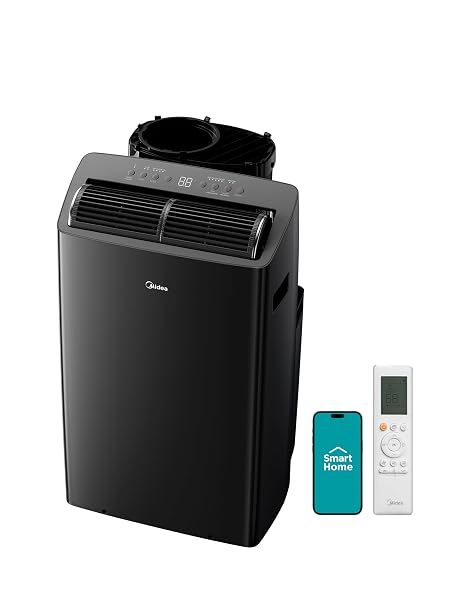
The choice here is dual hose versus single, and the Gasbye 14,000 BTU Dual Hose Portable Air Conditioner, Inverter is the dual-hose pick, with the largest true DOE-rated capacity here and the only coverage rating that goes past one bedroom. A portable air conditioner is what you buy when a window unit won’t fit, or the lease won’t allow one. Every model here does the same basic thing: run a hose out a cracked window and dump heat outside while cooled air fills the room. Skip this list if you can install a window unit instead. A window AC is cheaper to run and quieter for the same cooling power, and nothing below beats that tradeoff.
The number to distrust on every box in this category is BTU. Manufacturers print the ASHRAE rating on the front — an older, more flattering test standard. The number that reflects what a unit does in your room is DOE, sometimes labeled SACC, and it runs meaningfully lower. Gasbye’s 14,000 BTU ASHRAE unit is rated 10,500 BTU DOE on Gasbye’s own site. BLACK+DECKER’s 10,000 BTU unit drops to 5,500 BTU DOE, nearly half. Only two of the five brands below publish that honest number at all; this list can’t compare all five on the metric that matters most. It can only tell you which two you can trust the printed BTU figure for, and which three you can’t.
Best Overall: Gasbye 14,000 BTU Dual Hose Portable Air Conditioner, Inverter
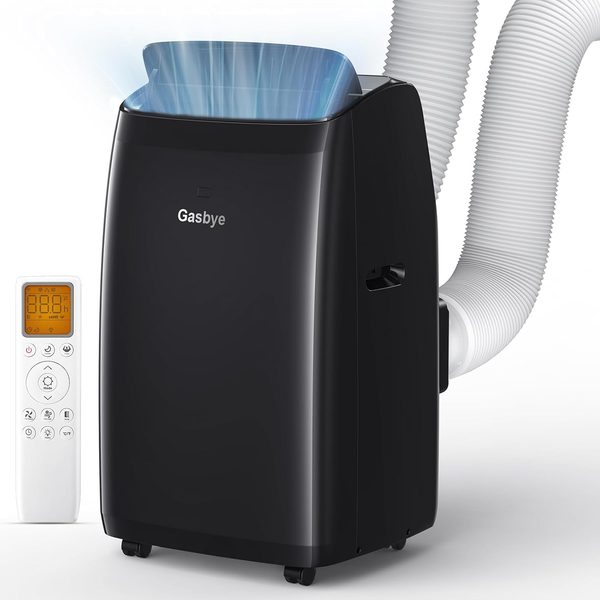
Gasbye is one of two brands here that publishes a DOE number next to the ASHRAE one: 14,000 BTU ASHRAE, 10,500 BTU DOE. That’s the largest true cooling capacity on this list once you’re comparing DOE to DOE. The full DC inverter compressor ramps down instead of cycling between full blast and off, which is quieter at idle — Gasbye rates the low setting at 45 dB — and cheaper to run over a long afternoon.
The dual-hose design is also why it’s rated for more square footage than anything else here, up to 500. A dual-hose unit pulls outside air for the condenser instead of dragging already-cooled room air back through the same duct it just used to dump heat, so it cools faster for the same rating. The cost is two hoses to route out the window instead of one, which takes a slightly wider gap or a two-hose window kit.
Typically: $425–$575 | Retailer: Amazon
Buy this one if you’re cooling anything bigger than a single bedroom. It’s the only pick here both sized and DOE-rated for it.
Quietest: DREO Portable Air Conditioner 515S, 12,000 BTU
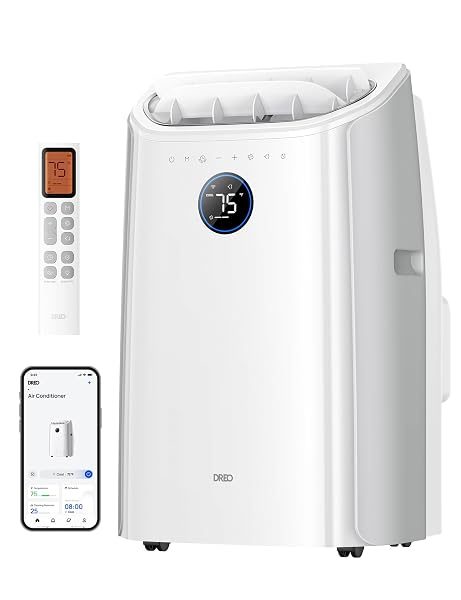
DREO doesn’t publish a DOE number for this unit anywhere on its own site, only the 12,000 BTU ASHRAE figure, so it can’t be measured against the Gasbye or the BLACK+DECKER unit below on true cooling capacity. What it does have is a drainage-free design: condensate re-evaporates and vents out with the exhaust air instead of collecting in a bucket you empty, and the side effect is a quieter compressor housing since there’s less internal plumbing to vibrate. DREO rates it at 46 dB.
Typically: $450–$600 | Retailer: Amazon
DREO’s own product page can’t agree with itself on room size, either. The headline claims 300 square feet of coverage. The specifications table further down the same page says 350.
That’s not a typo we’re fixing on the manufacturer’s behalf. It’s a fair reason to size down a little from whichever number you were planning around. Buy this one for a bedroom or a home office on video calls. Skip it for a room that gets serious afternoon sun.
Best Budget: SereneLife Portable Air Conditioner, 8,000 BTU
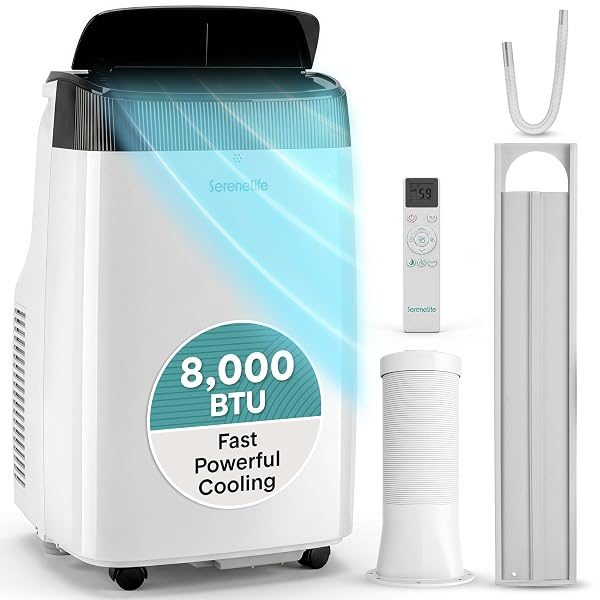
SereneLife publishes an ASHRAE figure and nothing past it: 8,000 BTU, no DOE or SACC rating, no room coverage.
What is confirmed: a single exhaust hose, about 770 watts of draw, and a noise rating of 49 to 52 dBA, the loudest number any brand here states outright.
It costs a fraction of everything else here and does one job, a small room, moderate heat, reliably enough.
Typically: $275–$375 | Retailer: Amazon
Buy this one on room size, not brand loyalty.
Best for Large Rooms: GrowthWing 14,000 BTU Smart WiFi Portable Air Conditioner
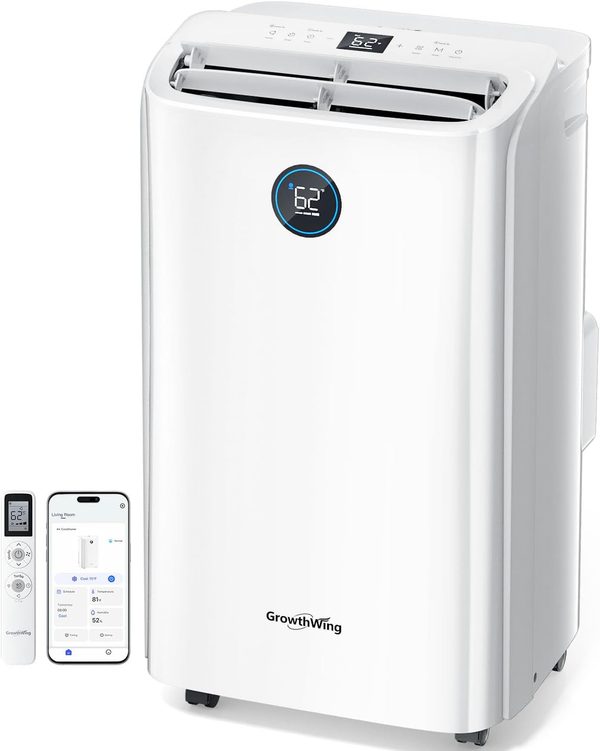
GrowthWing’s listing claims 700 square feet of coverage, the largest number on this list, but there’s no manufacturer page to check that claim against. GrowthWing’s own site sells mini-split systems only. A search of its catalog turns up no portable air conditioner at all, this model included, which is unusual among the five picks here and worth knowing going in: everything about this unit’s rating traces back to the retailer listing instead of the company that makes it. Coverage area is the claim this pick rests on; it exists only on the retailer listing, so we treat it as the seller’s figure. That is the standard How We Pick describes.
The features themselves are plausible for the category. It’s a 3-in-1 — cool, dehumidify, fan — with auto-evaporation, so there’s no bucket to empty in normal humidity. The WiFi is the part that earns its keep at this size. A unit for a big room is one you want running before you walk into it, not after, and app scheduling beats walking downstairs to a front panel.
Typically: $300–$425 | Retailer: Amazon
It’s cooling only. No heat mode, so it goes back in the closet come October. Budget real floor space for it, and a dedicated outlet if your circuit is already loaded.
Best for Small Spaces: BLACK+DECKER Portable Air Conditioner, 10,000 BTU, BPACT10WT
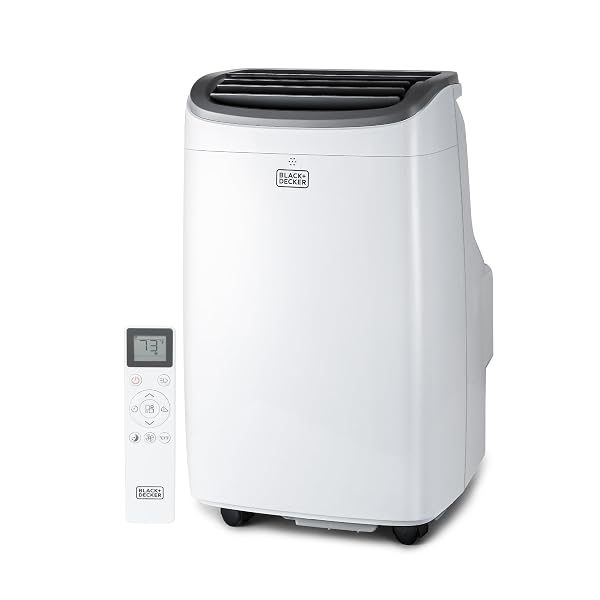
The other brand here that publishes a real DOE number, printed together with the ASHRAE figure on BLACK+DECKER’s own page: 10,000 BTU ASHRAE, 5,500 BTU DOE. That’s the wider of the two ASHRAE-to-DOE gaps among the brands that disclose both, nearly half. It’s still a reasonable middle ground between SereneLife’s 8,000 BTU budget unit and the two 14,000 BTU large-room units above, just not as large a middle ground as the number on the box implies.
It’s a 3-in-1 — cool, fan, dehumidify — with no inverter and no heat mode. BLACK+DECKER’s page doesn’t print a hose count, a room-coverage figure, or a noise rating, so those cells in the table below read “Not published” instead of being filled in from a retailer listing. The parts list ships one exhaust hose, which in practice means single-hose, but that is a read of the box contents rather than a spec line.
Typically: $300–$425 | Retailer: Amazon
Fewer features means less to go wrong in year three. That’s the whole case for it.
Which One to Buy
Most people should buy the Gasbye. It’s the largest confirmed cooling capacity on this list once you’re reading DOE instead of ASHRAE, it’s dual-hose so it isn’t fighting itself by pulling warm air back in, and it’s one of only two brands here willing to print the less flattering number next to the one on the box.
Buy the SereneLife instead if the room is small and the price gap matters more than headroom. Buy the DREO if quiet matters more than raw capacity and you can live with a manufacturer that can’t settle on its own square-footage claim.
The GrowthWing and the BLACK+DECKER are both reasonable units for what they do, but they’re the two hardest to size correctly from published information. One has no manufacturer spec page at all. The other only shares BTU and stops there.
What This Category Is Bad At
Printing the number that matters. ASHRAE, the flattering rating, is on every box in this category. DOE, the number the government tests for, showed up on only two of the five manufacturer pages checked for this list. That’s not really a coincidence. ASHRAE numbers sell units.
Room coverage is nearly as unreliable. SereneLife and BLACK+DECKER don’t publish a square-footage figure at all. DREO publishes two different ones on the same page and doesn’t appear to have noticed. GrowthWing’s 700-square-foot claim comes from a retailer listing with no manufacturer page behind it to check it against.
None of this makes these bad air conditioners; it means the spec sheet is the wrong place to trust blindly in this category. The DOE number, on the two boxes that print it, is worth more than everything else on the label combined.
| Model | BTU (ASHRAE) | BTU (DOE/SACC) | Room Coverage | Hose Type | Noise |
|---|---|---|---|---|---|
| Gasbye 14,000 BTU Dual Hose | 14,000 BTU | 10,500 BTU | 500 sq ft | Dual | 45 dB |
| DREO 515S | 12,000 BTU | Not published | 300 sq ft or 350 sq ft — DREO’s own page states both | Single | 46 dB |
| SereneLife SLPAC8 | 8,000 BTU | Not published | Not published | Single | 49–52 dBA |
| GrowthWing 14,000 BTU Smart WiFi | No manufacturer specifications published — GrowthWing’s site sells mini-split systems only; no portable AC product page found | ||||
| BLACK+DECKER BPACT10WT | 10,000 BTU | 5,500 BTU | Not published | Not published | Not published |
Prices and availability were checked in September 2026 and can change. As an Amazon Associate we earn from qualifying purchases.
Leave a Reply