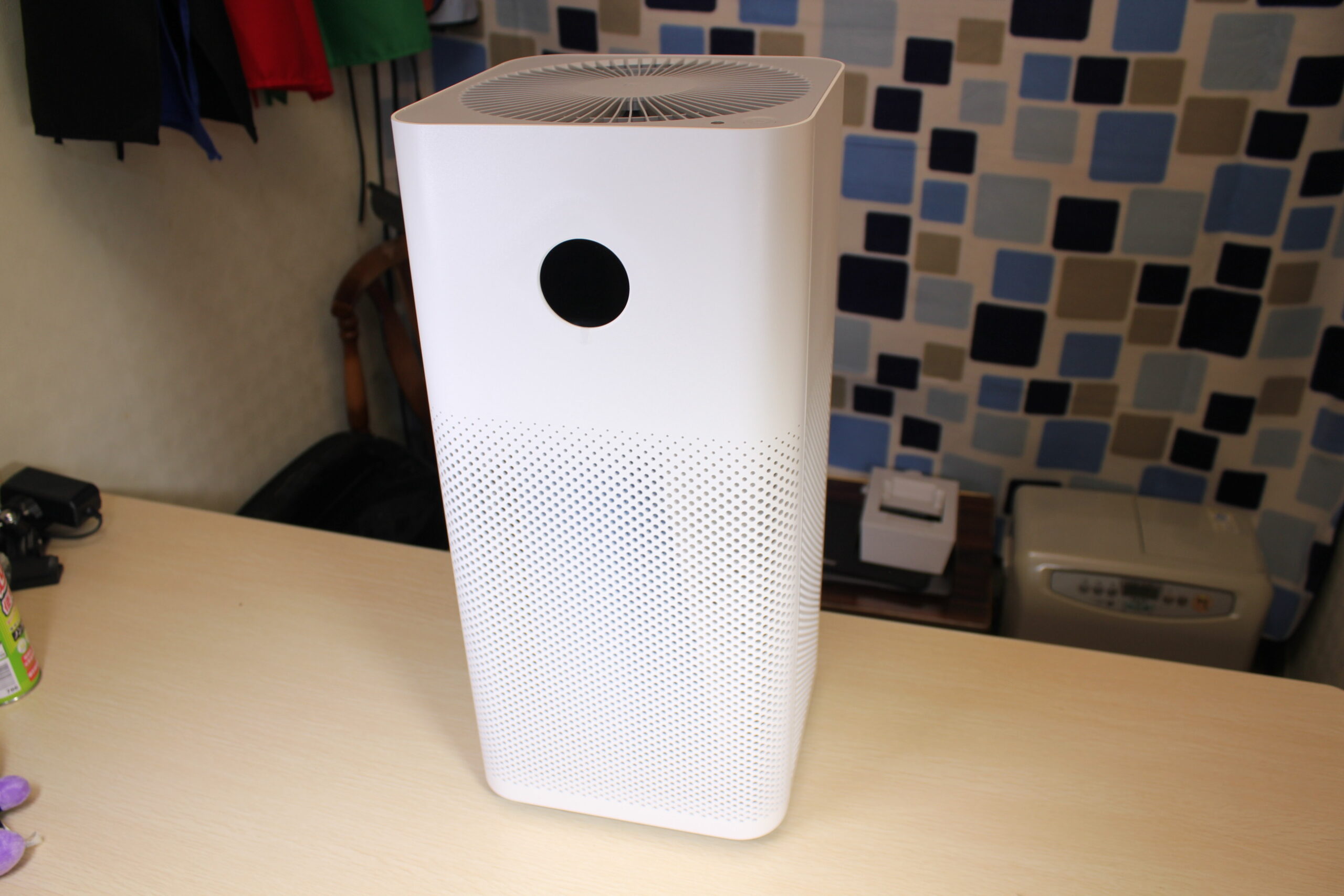
The WINIX 5510 Air Purifier is the all-round living-room pick, AHAM Verifide at 392 sq ft on a pelleted-carbon bed that cuts cooking and pet odor rather than masking it, though its auto mode senses gas rather than dust. Air purifier spec sheets all sound similar: HEPA filter, smart app, auto mode. The numbers that actually predict performance — real room coverage, what the auto-mode sensor reacts to, how loud it actually gets — often aren’t printed biggest on the box. These five cover the situations that come up most: an all-around living-room choice, a cheap single-room option, a heavier-duty pick for allergies, the quietest bedroom option, and a design-forward unit for anyone who doesn’t want a plastic tower in the corner.
| Model | Room coverage | CADR: Dust / Pollen / Smoke (cfm) | Published noise | Auto-mode sensor |
|---|---|---|---|---|
| WINIX 5510 | 392 sq ft @ 4.8 ACH | 252 / 247 / 253 | Not published | Gas/odor sensor only, no particulate sensor |
| LEVOIT Core 300 | 1,066 sq ft @ 1 ACH | 143, combined (not split by pollutant) | 24–54.5 dB | No auto mode; manual speed control only |
| COWAY Airmega Mighty2 | 1,800 sq ft @ 1 ACH | 242 / 249 / 240 | 19–50 dB | Laser particle sensor (PM1/2.5/10) |
| BLUEAIR Blue Pure 311i Max | 439 sq ft @ 4.8 ACH | 314 / 365 / 283 | 23–50 dB | Integrated PM2.5 particle sensor |
| Rabbit Air A3 SPA-1000N | 1,070 sq ft @ 2 ACH | 262 / 315 / 257 | 20.3–51.0 dB | Odor and particle sensors |
Best Overall: WINIX 5510 Air Purifier
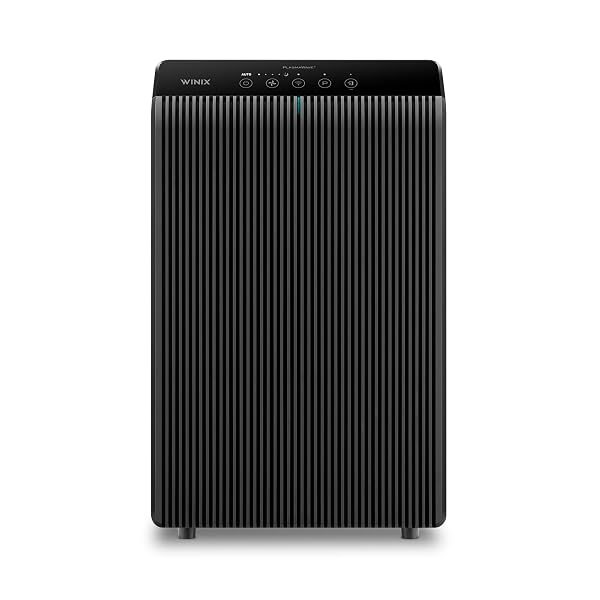
The 5510 succeeds Winix’s older 5500-2 with WiFi and a proper pelleted-carbon filter bed, not smarter air sensing. Auto mode reacts to a gas/odor sensor only — no particulate sensor, so it won’t ramp up for a dust or pollen event. The 226-gram carbon bed, a separate stage from the washable pre-filter, genuinely cuts cooking and pet odor rather than masking it.
AHAM Verifide rates it at 392 sq ft at roughly 4.8 air changes per hour, with a smoke/dust/pollen CADR in the low 250s cfm — see the sizing section below for why this figure, not the larger one you’ll see elsewhere, is the one to trust. A fourth stage, PlasmaWave, is defeatable and auto-disables in Sleep Mode.
Typically: $150–$210 | Retailer: Amazon
Best Budget: LEVOIT Core 300 Air Purifier
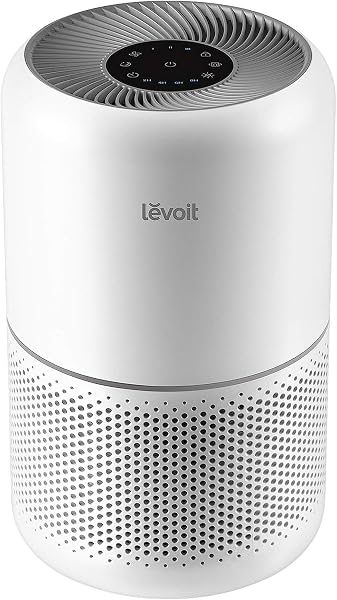
The Core 300 suits a single bedroom or home office, not a whole floor: a 3-stage filter (pre-filter, particle filter, carbon pellets) with no app and no sensor — just a dial and a few fan speeds. Levoit’s current page has quietly dropped the "True HEPA" language it used to carry, now describing fine dust, smoke, pollen, and pet dander capture; treat it as HEPA-grade, not certified True HEPA.
Levoit’s own honest coverage figure is 222 sq ft at a 4.8 ACH standard, with a 143 cfm CADR — don’t be swayed by the larger 1-ACH number some listings print instead. That simplicity is the appeal: fewer things to break, a smaller footprint, and a filter that’s cheap to keep replacing.
Typically: $70–$100 | Retailer: Amazon
Best for Allergies: COWAY Airmega Mighty2 Air Purifier (Next Gen of AP-1512HH)
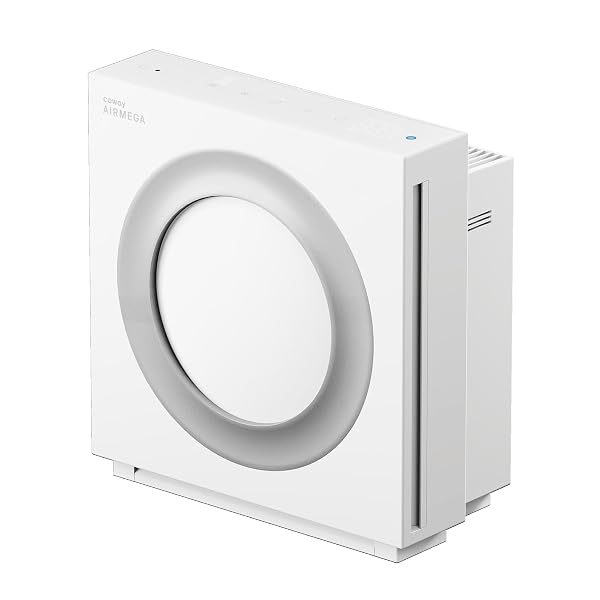
Coway’s Mighty line has been a go-to for allergy and pet-dander households for years, and the Mighty2 keeps the formula: a washable pre-filter ahead of a 2-in-1 HEPA-and-carbon filter, IEST-certified to remove 99.97% of particles at 0.3 microns. Auto mode reacts to a real MegaScan laser sensor detecting PM1, PM2.5, and PM10, not just odor — a genuine particulate-sensing auto mode, unlike Winix. A filter-change indicator light exists; we couldn’t confirm whether it tracks real filter condition or just elapsed hours.
Coway’s own figure puts coverage around 390 sq ft at roughly 5 ACH, with CADR in the 240s cfm. It’s built for continuous, heavier-duty filtration — what you want if pet hair or seasonal pollen is a daily problem, not an occasional one.
Typically: $225–$300 | Retailer: Amazon
Quietest: BLUEAIR Blue Pure 311i Max Smart Air Purifier
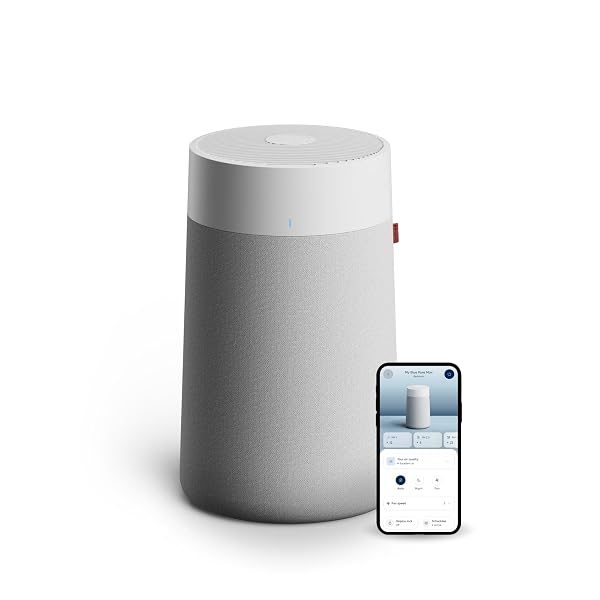
Blueair’s HEPASilent tech pairs mechanical filtration with an electrostatic charge, letting the fan run quieter than a purely mechanical HEPA design at the same output — one of the calmer options here at low settings, though independent testing still measures it louder than the marketing floor at every speed. It covers a mid-size room (Blueair claims 439 sq ft; independent testing is more conservative, closer to 330 sq ft), with WiFi and an auto mode driven by a real PM2.5 optical sensor.
One thing to know before buying: the electrostatic stage core to HEPASilent can’t be turned off, unlike Winix and Coway. Blueair claims certification to an independent zero-ozone standard and CARB’s limits — a manufacturer claim we haven’t independently re-verified. If noise is the dealbreaker on every other purifier you’ve tried, this is worth it, just know the ionizer runs continuously.
Typically: $200–$275 | Retailer: Amazon
Best for Design-Conscious Rooms: Rabbit Air A3 SPA-1000N HEPA Air Purifier
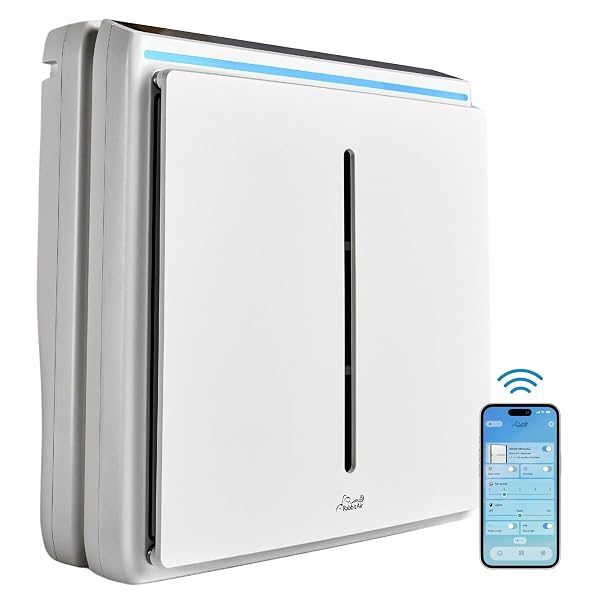
Most air purifiers look like appliances because they are one; the A3 can also mount to a wall like decor — worth noting that’s optional, not the only way to run it, since it’s built for floor or tabletop use too. This listing ships with the Toxin Absorber filter, one of four selectable variants (Germ Defense, Pet Allergy, Toxin Absorber, Odor Remover).
Auto mode combines a laser particle sensor (PM1, PM2.5, PM10) with a separate odor sensor and three sensitivity levels. Rabbit Air’s own figures are 535 sq ft at 4 ACH — comparable to the other four’s honest numbers — or 1,070 sq ft at a lower 2 ACH for casual use. It costs meaningfully more, and that premium buys the wall-mount option and finish choices as much as filtration power.
Typically: $650–$850 | Retailer: Amazon
How to Actually Size a Purifier to Your Room
The most misleading number in air purifier marketing is the room-coverage figure on the box, almost always calculated at 1 air change per hour (ACH) — not enough to clean a room quickly. The more meaningful standard, used by AHAM Verifide and independent reviewers, is 4-5 ACH. The gap is large: Winix’s 5510 is 392 sq ft at ~4.8 ACH but 1,881 at 1.0 ACH; Levoit’s Core 300 is 222 at 4.8 ACH versus 1,066 at 1.0; Coway’s Mighty2 is roughly 390 at 5 ACH versus 1,800 at 1.0; Blueair’s 311i Max is 439 by its own honest guidance versus 2,107 at 1.0 ACH.
The Rabbit Air A3 is upfront about this trade-off, publishing 535 sq ft at 4 ACH alongside 1,070 sq ft at 2 ACH rather than featuring only the low-ACH number. The takeaway: check the ACH behind any square-footage figure before comparing purifiers, and size to 4-5 ACH for a room you want cleaned quickly, not just filtered eventually.
What Auto Mode Is Actually Reacting To
"Auto mode" means different things depending on the sensor driving it. The Winix 5510 uses a gas/odor sensor only — no particulate sensor, so it won’t speed up for a dust cloud or pollen, only for smells. The Levoit Core 300 has no sensor and no auto mode at all; you set fan speed by hand.
The Coway Mighty2, Blueair 311i Max, and Rabbit Air A3 all use genuine particulate sensors instead: Coway’s MegaScan laser sensor and Blueair’s optical sensor both detect PM2.5 directly, and the A3 pairs a laser particle sensor with a separate odor sensor. If you want a purifier that reacts to a dusty afternoon, not just a smelly one, those three are built for it.
Marketing Noise Floor vs. What You’ll Actually Hear
Every manufacturer publishes a best-case decibel number under ideal conditions, and independent testing consistently comes in louder. The Levoit Core 300 is marketed as low as 24 dB but measured 38.9-50.2 dBA; the Blueair 311i Max claims 23 dB but measured 34.9-57.7 dBA; the Winix 5510’s 23.5 dB floor compares to measured figures of 35.2-67.2 dBA.
The Coway Mighty2 measured quietest of the traditional tower units, from 35.9 dBA at its lowest setting up to 56.9 dBA at Turbo. The Rabbit Air A3 is the one pick where measurement — roughly 43 dB at top speed, lows around 20 dB — doesn’t show a large gap from its claimed 20.3-51.0 dBA range.
Filters: Type, Real Cost, and How Often You’ll Buy Them
"True HEPA" isn’t a label every manufacturer still uses, and its absence isn’t necessarily a downgrade. Levoit has quietly dropped True HEPA language from the Core 300’s marketing; Coway’s Mighty2 filter is IEST-certified to remove 99.97% of particles at 0.3 microns instead. The Winix 5510’s real differentiator is its 226-gram pelleted carbon bed, a separate stage that genuinely cuts odor rather than masking it.
Replacement schedules vary more than filter type: testing put both the Levoit Core 300 and Blueair 311i Max on a roughly six-month cycle, while Coway’s 2-in-1 filter is rated closer to twelve months. Rabbit Air A3’s four selectable variants are also rated for about 12 months under continuous use.
Ionization and Ozone: The One Thing to Check Before You Buy
Several of these units add an ionizer or electrostatic stage on top of mechanical filtration, and whether you can disable it varies by brand. The Winix 5510’s PlasmaWave stage is defeatable — switch it off, and it auto-disables in Sleep Mode. The Blueair 311i Max is the exception: the electrostatic stage core to HEPASilent can’t be disabled.
Blueair claims certification to an independent zero-ozone standard and CARB’s limits — unverified by us. If you specifically want the option to run zero ionization, confirm that before buying: on the Blueair pick, it’s a permanent feature of the design, not a setting. An ozone certification is a lab result we have no way to reproduce. So it stays attributed to Blueair and never becomes our own finding, which is the line How We Pick draws.
Form Factor and Where It’ll Actually Live
Four of these five are the shape you’d expect: a cylindrical or box tower on the floor. The Rabbit Air A3 is the outlier, also mounting flush on a wall like decor — optional, since it’s built for floor or tabletop use too. That flexibility, plus finish and color options, is part of what its higher price buys.
For the other four: the Levoit Core 300 is compact enough for a desk or nightstand; the Winix 5510 and Coway Mighty2 are sized for a living-room floor; the Blueair 311i Max sits similarly but is quiet enough to run on a nightstand overnight.
Leave a Reply