If you play a couple of times a week and want one paddle you can stop thinking about, buy the Six Zero Double Black Diamond Control: a 16mm raw-carbon paddle in a hybrid shape, carrying USA Pickleball as its registered approval body, and giving up very little to the tour paddles above it. The other four picks exist because you are buying your first real paddle, or you already generate your own power, or you want the widest sweet spot you can get.
Two things decide whether a paddle suits you, and neither is the brand: whether it is legal where you play, and how thick the core is.
Both are things you can check before you buy rather than after, which is the test every pick on this site has to pass – see How We Pick.
The approval rules changed, and old stock is where people get caught
There are now two stamps, and they are not the same list. USA Pickleball (USAP) approval is what a sanctioned amateur tournament checks; UPA-A certification is what the professional tour requires. A paddle can hold one and not the other.
The change that matters is PBCoR testing, which measures how much energy the face returns to the ball, with a ceiling of 0.43. It is stricter than the deflection test it replaced, and paddles that were comfortably legal under the old standard have failed the new one. Enforcement phased in through late 2025. Category growth is what drove it: wholesale paddle sales rose 24% year over year in 2025, according to the Sports & Fitness Industry Association, and the money that arrived with that growth pushed face technology past what the old test could police.
If you only play rec games at the local courts, none of this constrains you. If there is any chance you will enter a sanctioned event, look your exact model up on the governing body’s current list first — approval is granted per model and per variant, and brands routinely sell the same name in two core thicknesses and two shapes, only one of which may be listed. Old stock and used paddles carry the real risk, because listings get removed as well as added. Delamination is the failure to know about, because it is silent: the face separates from the core, the paddle gets livelier rather than deader, and stops being legal long before it stops feeling good.
Core thickness is the one spec that maps to how you play
A 16mm core holds the ball on the face marginally longer. That extra dwell is what produces control, a larger usable sweet spot, and a paddle that absorbs a hard drive instead of flinging it back. A 13mm or 14mm core is stiffer: the ball leaves quicker, there is more free pop, the sweet spot shrinks, and mishits reach your elbow.
The mistake newer players make is buying thin because they want power. Pickleball is not decided by drives; it is decided at the kitchen line, where every reset and dink has to land in a box a few feet deep, and a thin core makes those shots leap off the face and sail. Anyone still working on consistency is better served by 16mm.
The other number to learn is swing weight. Static weight, the figure on the box, tells you little; swing weight — roughly 105 to 120 across this category — is what your shoulder and your reflexes feel. Elongated shapes raise it, and lead tape raises it fast. If you arrive late in hands battles at the net, your swing weight is too high whatever the scale says.
If you want one paddle to stop thinking about
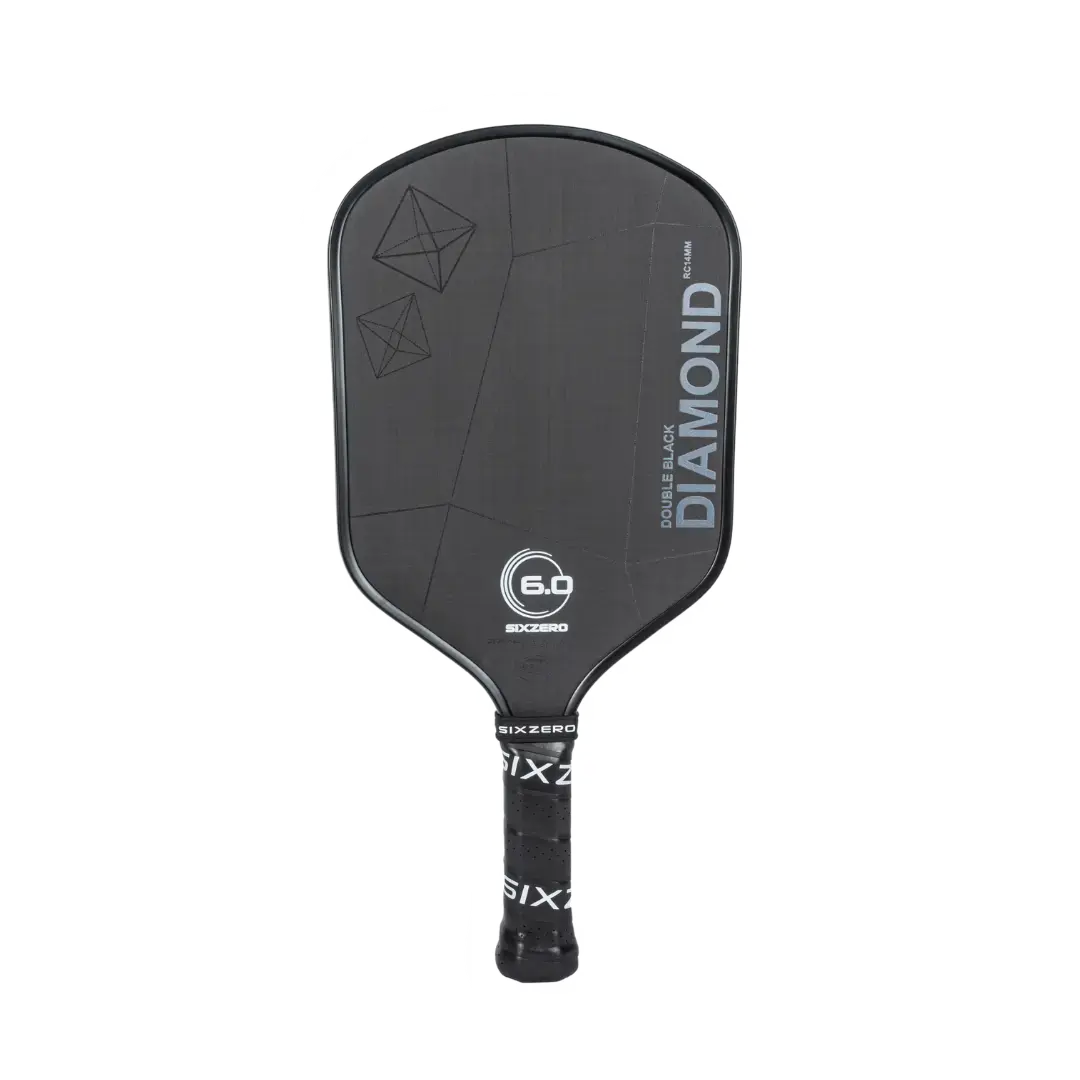
Best overall: Six Zero Double Black Diamond Control
Typically: $150–$210
Retailer: Amazon
A 16mm raw-carbon paddle in a hybrid shape, between the elongated and widebody extremes: useful reach without the swing-weight penalty a full elongated paddle charges, landing at 114 on Six Zero’s own published figure, comfortably mid-range. Six Zero lists USA Pickleball as the registered approval body for this paddle, which is the stamp a sanctioned amateur event checks. Its product page does not mention UPA-A certification or a PBCoR number either way, so if a professional-tour event is in your plans, look the exact variant up on the current UPA-A list before you enter. Two honest caveats. For a paddle with “Control” in the name it is livelier than you expect, so your first session of resets will sail until you shorten the stroke. And the stock grip turns slick once your hands sweat — plan on an overgrip from day one.
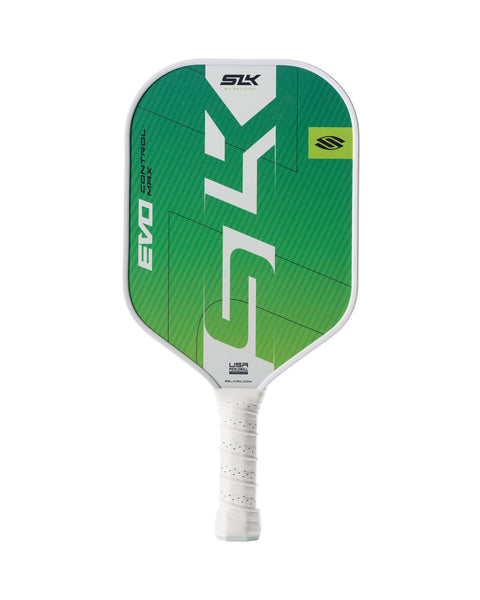
Best first real paddle: Selkirk SLK Evo Control
Typically: $70–$90
Retailer: Amazon
The paddle to buy when the one that came bundled with two balls and a mesh bag starts holding you back. It is 16mm, thermoformed, with a T700 carbon face — a specification reserved for the top of the range not long ago. What you give up against the pick above is refinement rather than capability: the face is quieter, put-aways feel deader, and the sweet spot is forgiving without being rewarding. Selkirk being an established brand with real warranty support counts for more than usual at this end of the market, where much of the competition is sold by names that will not exist in two years.
If you already generate your own power
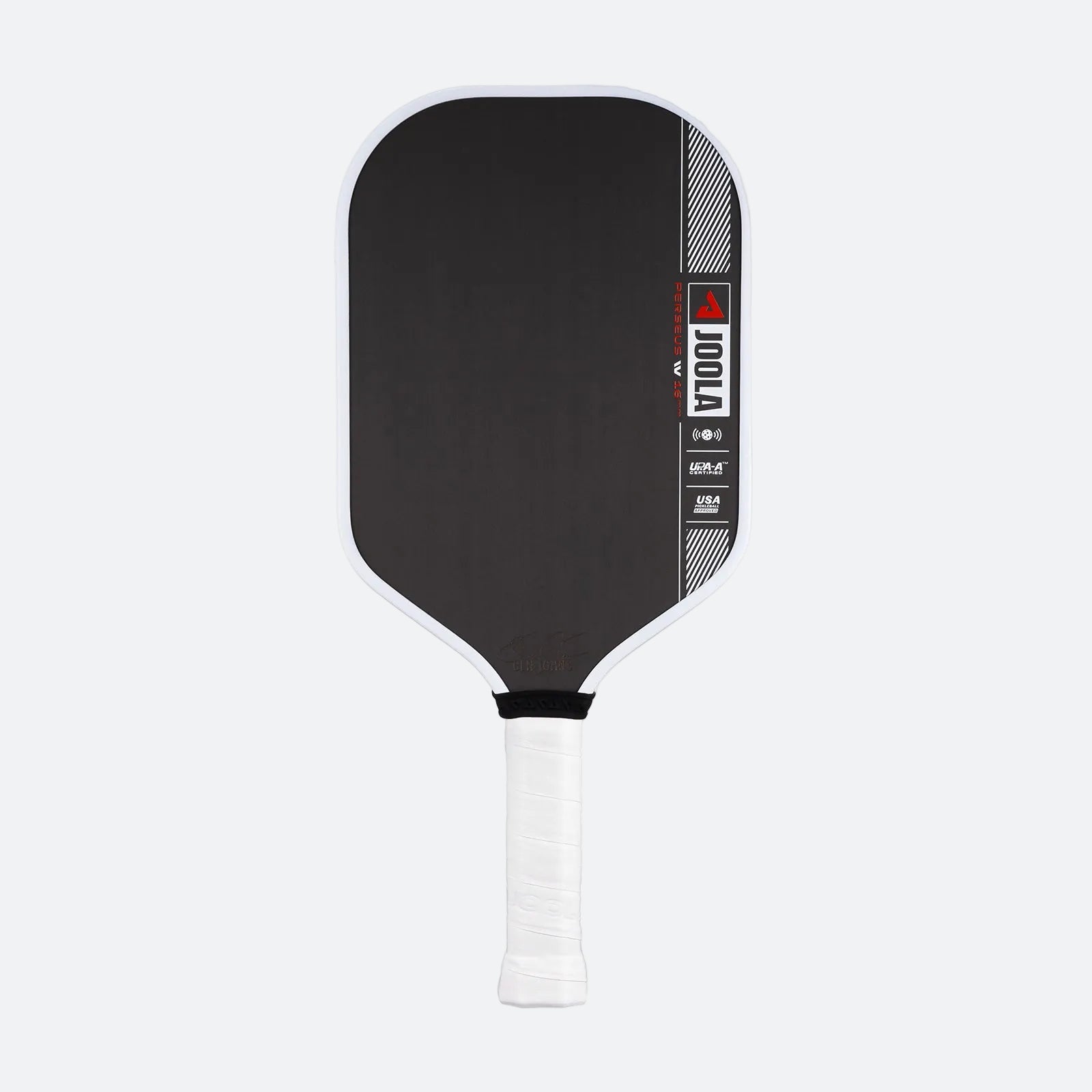
Best for advanced and competitive play: JOOLA Ben Johns Perseus Pro IV 16mm
Typically: $200–$275
Retailer: Amazon
The signature paddle of the most decorated player in the sport, built around JOOLA’s TechFlex Power face, carrying both UPA-A pro certification and USAP PBCoR .43 approval, so it is legal on either side of that line. The honest framing is that it suits someone whose control is already good enough to survive the extra power: a face that rewards a fast, committed swing punishes a tentative one, and if your unforced errors currently go long, this will send them longer. One practical warning: JOOLA sells Perseus in several core thicknesses under nearly identical names, and a 14mm Perseus is a different paddle from this 16mm one.
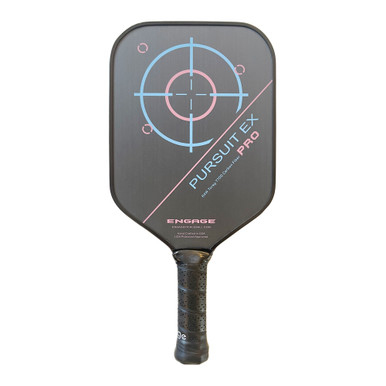
Best widebody for net play: Engage Pursuit Pro EX
Typically: $140–$200
Retailer: Amazon
Two features here pull in opposite directions. The widebody shape is the beginner-friendly part: a wider, shorter face puts the sweet spot lower and broader, so off-centre contact still produces a real shot. Engage sells the EX in two core thicknesses and both are thinner than the 16mm paddles above, which is the poppier, faster, less forgiving choice — quick hands at the net, less help on a reset. It suits someone with decent hands who wants speed at the kitchen and does not need the paddle to soften the ball for them. If what you want from Engage is a control paddle, the thicker of the two cores, the 15.2 mm, is the one to ask for.
The all-court middle
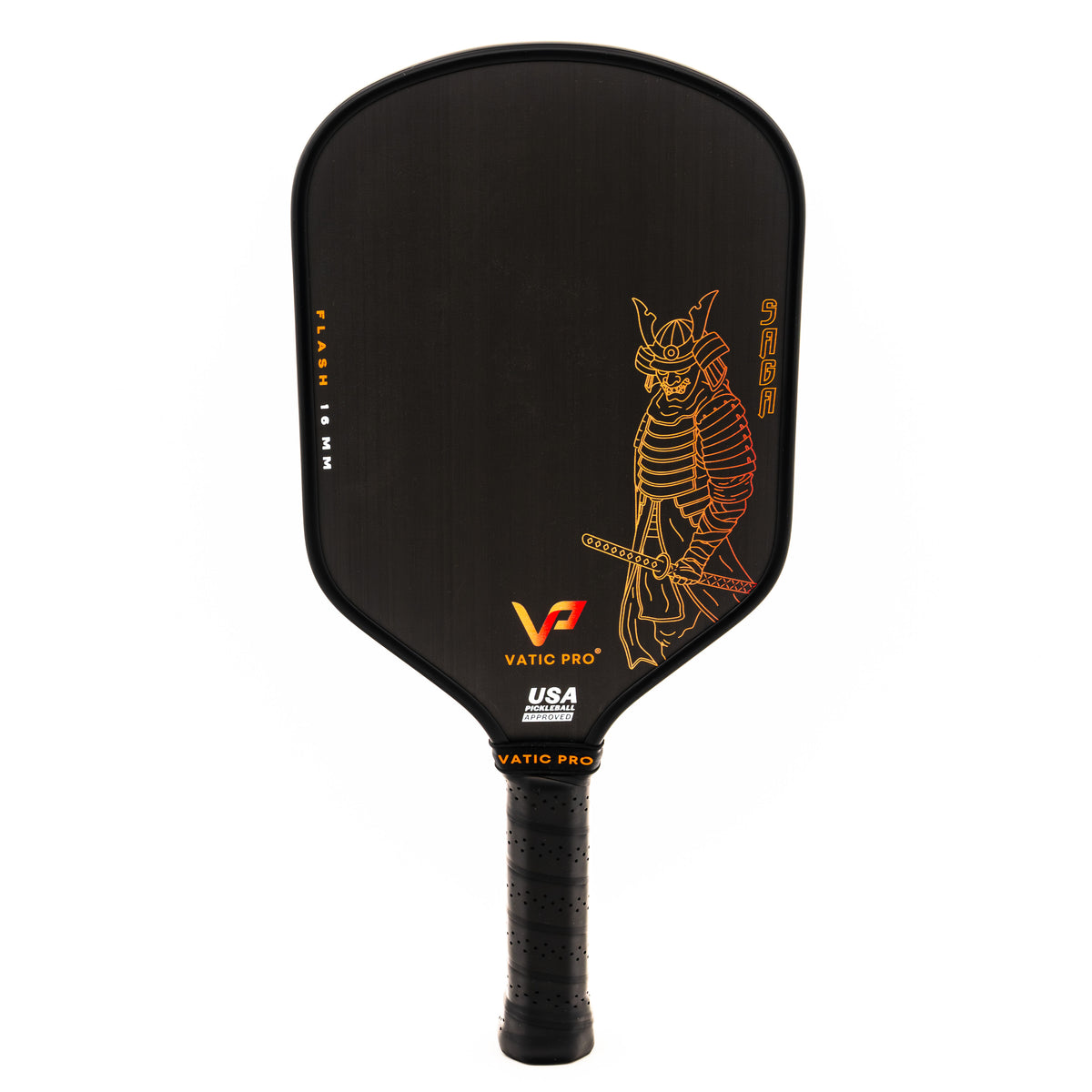
Best balanced pick from a direct-to-consumer brand: Vatic Pro Saga
Retailer: Amazon
A 16mm paddle built on what Vatic calls a proprietary multi-layer composite surface with a Toray T-700 carbon fiber top layer, over a privately sourced 10mm cell honeycomb core. Read that 10mm carefully: it is the size of the honeycomb cells, not the thickness of the paddle, and the Saga is sold in 14mm and 16mm. Independent reviewers who test paddles in volume place the Saga at the upper end of the all-court category rather than in the power category, and that is the right read — if you want effortless free power, this is not the paddle that supplies it. What it is, is a well-balanced paddle from a direct-to-consumer brand that undercuts the majors for comparable construction. Vatic sells the Saga in more than one core thickness; this listing is the 16mm.
What the makers publish, and what they do not
Every figure below is the manufacturer’s own, copied from that brand’s own product page. Where a cell reads “Not published”, that page does not state it. That is a fact about the page, not a judgement about the paddle, and it does not mean the paddle lacks the property.
| Paddle | Core thickness | Length and width | Handle length | Grip circumference | Weight as published | Approval as published |
|---|---|---|---|---|---|---|
| Six Zero Double Black Diamond Control, 16mm | 0.63 in / 16 mm | 16.3 in × 7.5–7.7 in (413 mm × 192–196 mm) | 5.5 in / 140 mm | 4.125–4.25 in / 105–108 mm | Standard 8.0–8.2 oz; Pro 8.3–8.5 oz; Light 7.7–7.9 oz | USA Pickleball, given as Registered Approval Body |
| Selkirk SLK Evo Control, XL and Max | 16 mm, both | XL 16.4 in × 7.4 in; Max 16 in × 7.85 in | XL 5.75 in; Max 4.85 in | 4.25 in, both | 7.6–8.1 oz, both | USA Pickleball-approved |
| JOOLA Ben Johns Perseus Pro IV 16mm | 16 mm | 16.5 in × 7.5 in | 5.5 in | 4.25 in, which JOOLA notes may vary slightly | 8.1 oz average | UPA-A Certified; USAP PBCoR .43 Certified |
| Engage Pursuit Pro EX | 12.7 mm or 15.2 mm, two separate SKUs | 16 in × 8 in | 5 in | 4.25 in | 8.0 oz average, both SKUs | USAPA listed and approved for tournament play |
| Vatic Pro Saga, 16mm | 16 mm | Flash 16.2 in × 7.7 in; Flash long handle 16.375 in × 7.625 in; V7 and V7 long handle 16.5 in × 7.5 in; Bloom 16.0 in × 8.0 in | Standard 5.3 in; long handle given as both 5.75 in and 5.6 in | 4.125 in, all three shapes | Not published | Not published |
Three of these five names cover more than one paddle, so the row says which one. Six Zero sells the Double Black Diamond Control in 14mm, 15mm elongated and 16mm, and the row is the 16mm, the version this guide recommends. Selkirk has no plain SLK Evo Control page at all; the specifications live on two separate product pages, XL and Max, and since both are 16mm both are printed. Vatic sells the Saga in 14mm and 16mm and in three shapes, Flash, V7 and Bloom, so the row is the 16mm with all three shapes listed, because the guide names a thickness and not a shape. Where a maker publishes several figures, all of them are printed: nothing here is averaged, and nothing is the flattering pick of a range.
Face material is the one specification all five publish, in five different vocabularies, which is why it reads better here than in a column. Six Zero lists T700 Raw Carbon. Selkirk lists a T700 CarbonFusion Carbon Fiber surface over a Rev-Control Polymer Honeycomb core, thermoformed. JOOLA lists Textured Carbon Fiber. Engage lists Raw Carbon Fiber with a Next Generation Inner Application Layer over a proprietary polymer composite core. Vatic lists a proprietary multi-layer composite surface with a Toray T-700 carbon fiber top layer. All five say carbon, and they do not all mean the same thing by it.
Two of these pages disagree with themselves, so both figures are printed rather than a pick between them. Vatic offers a handle option labelled Long Handle (5.75in) in the buying selector, while the specification list further down the same page gives Grip Length LH as 5.6 Inches. Six Zero, to its credit, footnotes its own numbers: “measured values are estimated based on internal lab testing”, which covers the weights in the table and the swing weight of 114 quoted earlier.
Two columns you might expect are missing on purpose. Swing weight is absent because only Six Zero publishes one, as a lab estimate; one entry in five is not a comparison. PBCoR and UPA-A are not a column because only JOOLA publishes them, so its two certification strings sit in its approval cell instead. Which leaves one thing worth saying plainly: the Saga approval cell reads Not published because Vatic’s page says nothing about approval in either direction. That is not a claim that the paddle is unapproved, and this guide is not making one. If you intend to enter a sanctioned event, the governing body’s current list for your exact variant is the only thing that settles it.
Grit is a consumable, and that surprises people
A raw carbon face gets its spin from the texture left behind when the peel ply is stripped off in manufacturing. It is a physical surface, so it wears. A player on court several times a week will notice less bite within a few months: the paddle does not break, it just stops gripping the ball, and the serve that used to dive starts sitting up.
So a used raw-carbon paddle is someone else’s remaining grit, and the spin figures in any review were measured on a new one. A face that feels unusually aggressive out of the box — grit applied over paint or fibreglass rather than texture in the carbon itself — is generally the one that dies fastest.
Grip size is the cheapest thing to get wrong
Grip circumference runs from about 4 to 4.5 inches, and the fit test takes ten seconds: hold the paddle as you would to hit a forehand, and you should be able to slide the index finger of your free hand into the gap between fingertips and palm. Too large and your wrist locks up, which is where much of the elbow pain in this sport starts. Too small and the paddle twists on anything struck off-centre.
The asymmetry decides it: you can build a handle up with an overgrip and you cannot shrink one, so between two sizes take the smaller. Handle length only matters if you hit a two-handed backhand — much under about 5.25 inches and your top hand runs out of room. Longer handles come attached to elongated shapes, which returns you to the swing-weight question.
If you take one thing from this: spend a season with a 16mm control paddle before buying the one your favourite professional endorses. The expensive paddles here ask more of the player holding them.
Leave a Reply