Riders who need the bike to fold and still handle gravel or light snow should look at the ENGWE L20 2.0, a 750W-rated fat-tire folder that arrives nearly assembled, with mechanical rather than hydraulic discs as the tradeoff. Electric bikes are one of the fastest-growing categories in consumer tech right now, and most of the big DTC brands you have heard of (Velotric, Lectric, Rad Power, Aventon) only sell through their own sites, not Amazon. Buy on Amazon instead and the market looks different: it skews toward budget and import brands, hub motors instead of mid-drive, and a wider range of quality control. None of that makes it a bad way to buy an e-bike, but it does mean checking different things before you order. Here are four picks by use case, chosen from what is actually purchasable and in stock on Amazon right now, plus what to know about motors, battery range, brakes, and legal classification before you check out.
| Model | Motor | Battery | Manufacturer-claimed range | Payload capacity |
|---|---|---|---|---|
| ENGWE L20 2.0 | 1,125W peak hub, 75 N·m torque | 52V 13Ah (base battery) | 68 mi pedal-assist – 28 mi throttle-only | 264 lb |
| Velowave Ranger 2.0 | 750W rated / 1,200W peak hub, 80 N·m torque | 48V 15Ah | 65 mi avg. pedal-assist (up to 90 mi at PAS1) – 30 mi throttle-only | 300 lb |
| ESKUTE T300 MAX (3-wheel trike, not a 2-wheel bike) | 1,200W peak hub | 48V 20.8Ah | 45–80 mi (brand-published range band) | 400 lb |
| Addmotor M-81 (Garootan) | 750W rated rear hub | 48V 15Ah | 75 mi at PAS1 (lowest assist level) | 400 lb |
Hub Motor vs. Mid-Drive: What You’re Actually Buying
Every bike in this roundup uses a hub motor — a motor built into the wheel itself — rather than a mid-drive motor mounted at the pedals. That’s not an oversight; it’s a real pattern in what’s actually sold on Amazon versus what DTC brands sell directly. Hub motors are simpler, cheaper to build, and easier to service, which is exactly why budget and import brands lean on them. Mid-drive motors use the bike’s own gears, which makes them more efficient on steep climbs and generally longer-lived under hard use, but they cost more and are rarer outside of bikes sold direct from the manufacturer or through specialty bike shops.
Neither is wrong for most riders. A hub motor is a perfectly reasonable choice for commuting, running errands, or flat-to-rolling terrain. If your rides involve sustained steep climbs or you’re putting serious mileage on the bike every week, that’s the scenario where a mid-drive’s efficiency advantage is worth seeking out, likely outside of Amazon.
Battery Watt-Hours, Claimed Range, and Real Range
Every manufacturer number in this article — range, top speed, payload — comes from that brand’s own listing or spec page, not from an independent test. Treat every claimed range figure as a ceiling, not an expectation. Real-world range depends on rider weight, terrain, tire pressure, temperature, and how much you rely on throttle versus pedaling; manufacturers test their best-case number and that’s the number that goes on the listing. Which manufacturer figures we repeat and which we flag as unverified is set out in How We Pick.
The battery’s actual size, measured in watt-hours (Wh = volts x amp-hours), is a better cross-brand comparison point than the range claim itself, because two brands testing under different conditions can quote wildly different range numbers off similarly sized batteries. When a listing gives you voltage and amp-hours but not a range you trust, multiply them yourself and compare that Wh figure against the bike’s rated range to sanity-check whether the claim is plausible.
Best Compact Fat-Tire Folding Bike: ENGWE L20 2.0
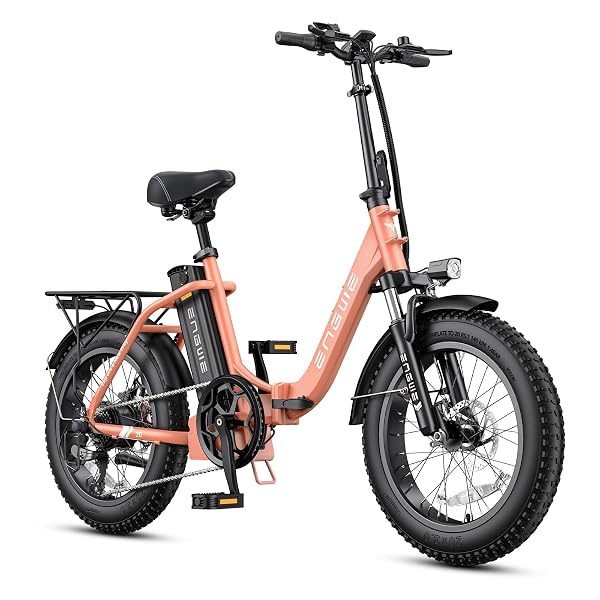
A 750W-rated, 1125W-peak hub motor with 75 N.m of torque, a 52V 13Ah battery, and 20×3-inch fat tires make this the pick for riders who want portability without giving up float on gravel or light snow. It folds, is roughly 90% pre-assembled out of the box, and weighs around 68 lbs.
The manufacturer rates it at up to 68 miles in pure pedal-assist and about 28 miles on throttle alone, with a 20 mph throttle-only top speed and up to 28 mph with pedal assist. Braking is mechanical disc, not hydraulic, on 180mm rotors — a real cost-cutting difference from the pricier DTC brands, and worth knowing before you buy rather than after.
Typically: $500–$700 | Check current price on Amazon
Brakes: Hydraulic vs. Mechanical Disc
Disc brakes come in two flavors and the difference matters more than it looks on a spec sheet. Hydraulic disc brakes use fluid to transfer lever pressure to the caliper, self-adjust as the pads wear, and generally need a lighter hand at the lever. Mechanical disc brakes use a cable, need periodic manual adjustment as cable and pads wear, and typically need more lever force for the same stopping power.
Among the four bikes here, only the Velowave Ranger 2.0 ships with hydraulic brakes; the rest use mechanical disc. That’s a real trade-off for the price, not a defect — mechanical disc brakes are safe and serviceable, they just ask a little more maintenance attention from you over the life of the bike.
Best for Trails and Rough Ground: Velowave Ranger 2.0
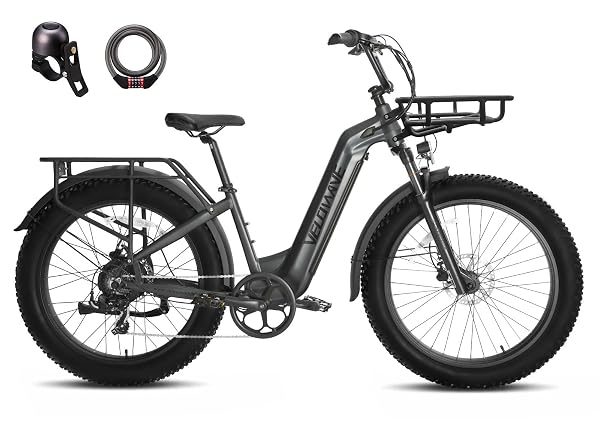
A 750W-rated, 1200W-peak geared hub motor and 26×4-inch Kenda fat tires are built for gravel, packed trail, and light off-road use that the folding commuter-style bikes above aren’t intended for. The 48V 15Ah (720Wh) battery is UL 2849-certified as a complete electrical system.
Unlike the other picks here, this one uses hydraulic disc brakes front and rear (180mm rotors) rather than mechanical — hydraulic brakes self-adjust as pads wear and generally need less maintenance, which matters more on a bike meant for rougher riding. Velowave rates average pedal-assist range around 65 miles and top speed at 28 mph with pedal assist or 20 mph on throttle alone; at roughly 73 lbs with the battery installed, it’s the heaviest bike in this list.
Typically: $1,150–$1,550 | Check current price on Amazon
Class 1, 2, and 3: What the Labels Mean and Where They Apply
US e-bikes are commonly sorted into three classes. Class 1 is pedal-assist only, with the motor cutting off at 20 mph and no throttle. Class 2 adds a throttle that can move the bike up to 20 mph without pedaling. Class 3 is pedal-assist only again, but the cutoff rises to 28 mph, and most states that recognize Class 3 add rules on top of it, commonly a minimum rider age of 16, a helmet requirement, and exclusion from multi-use trails and bike paths that allow Class 1 and 2.
As of 2026, 36 states plus DC have adopted this three-class system; a few, including Hawaii, Mississippi, and Vermont, have not fully adopted it and regulate e-bikes on their own separate terms. Every bike in this roundup combines a throttle with pedal assist that runs up to 28 mph, which is a common configuration on budget and import e-bikes but doesn’t map cleanly onto any single one of the three classes. Check your own state’s law and any local trail or bike-path rules before assuming a bike like this is welcome everywhere a Class 1 bike is.
Best Electric Trike for Extra Stability: ESKUTE T300 MAX
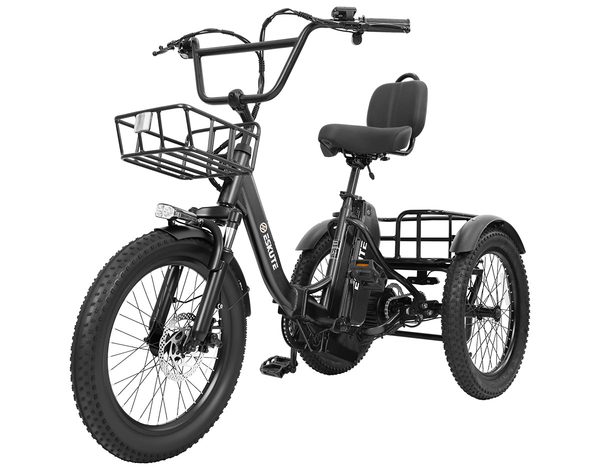
Three wheels instead of two remove the balancing act at stops, which is the reason to choose a trike over a two-wheeler in the first place. This one runs a 1200W-peak motor off a 48V 20.8Ah battery, has dual cargo baskets, a step-through frame, and a one-touch reverse gear for backing out of tight parking.
Eskute rates range at 45 to 80 miles depending on how much you pedal versus rely on the throttle, with dual disc brakes and 20×3-inch tires. Rated payload is 400 lbs and the trike itself weighs about 102 lbs unloaded — noticeably heavier than any two-wheeler here, which matters if you need to lift it onto a rack or up a step.
What to Check When It Arrives
Budget and import e-bikes typically ship partially assembled, and quality control on final assembly is where these brands most often cut corners compared to the DTC brands sold fully built. Before your first ride: check that both wheels are seated and quick-releases (or thru-axles) are fully tightened, that the handlebar and stem bolts are torqued, that both brakes engage firmly and evenly before the lever reaches the grip, and that the battery connector is fully seated and locks in place. Confirm the tires are inflated to the pressure printed on the sidewall, not just whatever they arrived at.
Look for a UL 2849 rating on the electrical system and a UL 2271 rating on the battery pack specifically — those are the two safety certifications called out on several of these listings, and they’re a meaningfully better signal than a brand’s marketing copy. If a listing doesn’t mention either, it’s worth asking the seller directly before you buy, since substandard e-bike batteries are a real and documented fire risk.
Best Cargo E-Bike for Families: Addmotor 20×4 Fat Tire Cargo Ebike
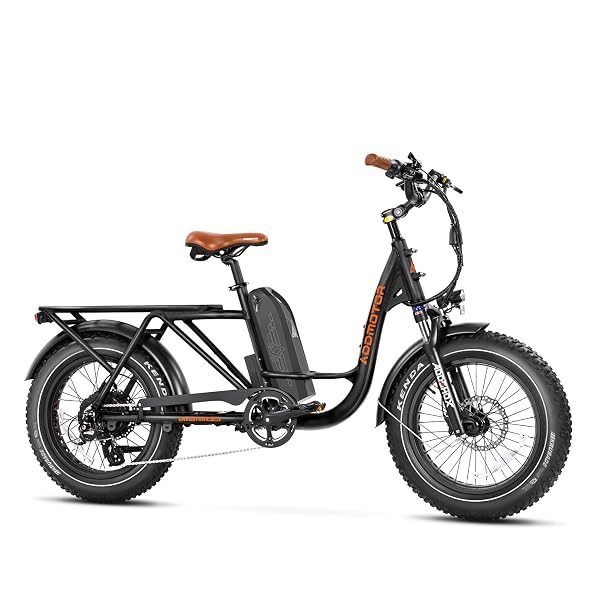
This is a long-tail cargo bike: the current Amazon listing title identifies it as an Addmotor 20×4 fat-tire cargo ebike, with the extended rear rack/seat area and wide 20×4-inch tires that combination implies for carrying a passenger or cargo behind the rider. The listing does not spell out motor wattage, battery size, or brake type the way some competing listings do, so treat those specifics as unconfirmed until you check the listing yourself at the time you buy rather than assuming they match any particular Addmotor model you may have researched separately.
Whatever the exact spec sheet turns out to be, the checklist is the same for any long-tail cargo e-bike: before loading a passenger or cargo, confirm the rear rack and seat hardware are fully torqued, that both wheels and the battery connector are properly seated, and that the tires are inflated to the pressure printed on the sidewall. It is also worth looking for a UL 2849 rating on the electrical system and a UL 2271 rating on the battery pack specifically — those are the two safety certifications worth checking for on any e-bike battery, regardless of brand or listing.
Typically: $1,000–$1,400 | Check current price on Amazon
Prices on Amazon move daily and none of the figures above are locked in, so check the current price and any available color or size options before you buy. If a listing you’re eyeing doesn’t match the model number or spec sheet described here, treat that as a sign the listing has changed since this was written rather than assuming the description still applies.
Leave a Reply