Between the two one-kilowatt-hour units here, the Anker SOLIX C1000 Gen 2 is the one to buy unless a single pound of pack weight decides it: same capacity as the Jackery, higher continuous output, and a far faster recharge. None of these can run a whole house indefinitely the way a gas-powered generator can — if you need to keep well pumps, central air, or the full panel running through a multi-day outage, a standby or portable generator is the better fit. See our guide to whole-house generator costs instead.
If you’re still here, you want something you can carry, plug in, and stop thinking about. Five picks below, and they split cleanly into two jobs: three are sized to live in a closet and cover a laptop, a fridge, and a few lights through a blackout; two are sized to replace a chunk of your panel. Most people shopping this list want the first kind — skip straight to the Anker SOLIX F3800 Plus or EcoFlow Delta Pro 3 only if you already know you need multi-day, whole-circuit backup. How those five were narrowed down, and what would get one dropped, is set out in How We Pick.
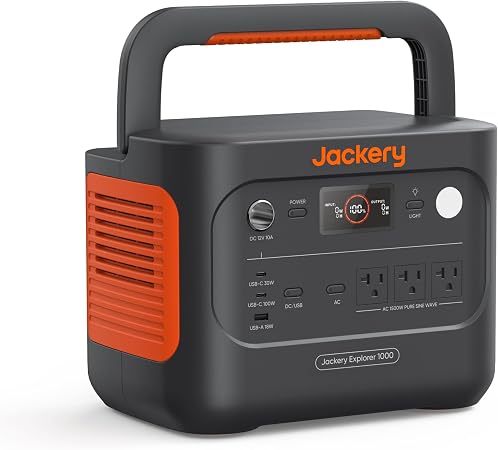
Best for Weekend Camping Trips: Jackery Explorer 1000 v2
Typically: $475–$650
Retailer: Amazon
At 1,070Wh and 23.8 lbs, the Jackery is the lightest unit here by about a pound, which is the whole case for it.
It isn’t the fastest to recharge.
Jackery lists a 1.58-hour full AC charge against 49 minutes for the Anker below at nearly identical capacity, so if speed between trips matters more than the pound in your pack, buy that one instead.
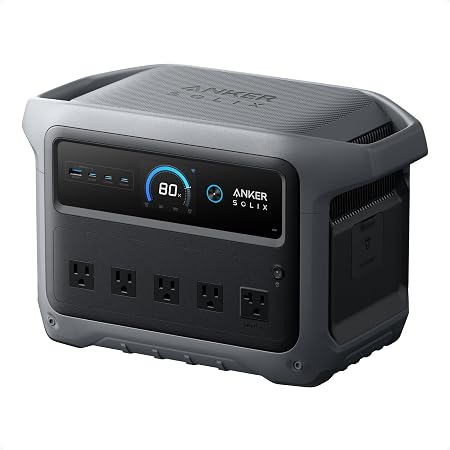
Best Budget Value Pick: Anker SOLIX C1000 Gen 2
Typically: $425–$575
Retailer: Amazon
Same class as the Jackery — 1,024Wh — but a higher 2,000W continuous output and a much faster recharge.
It’s a pound heavier.
Between these two, this is the one to buy unless that pound matters to you.
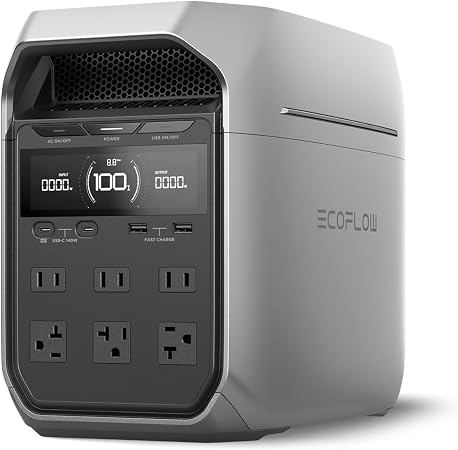
Best All-Rounder for Home & Travel: EcoFlow Delta 3 Plus
Typically: $550–$750
Retailer: Amazon
The Delta 3 Plus gives up a little on both fronts above it — heavier than the Anker, slower to recharge than either — in exchange for something neither does: a 10ms UPS switchover that keeps a router or NAS alive through a blink-and-you’d-miss-it outage, plus a battery system EcoFlow says you can expand later instead of replacing the whole unit.
That trade is worth it if you own gear that can’t tolerate a power gap. If you don’t, buy the Anker.
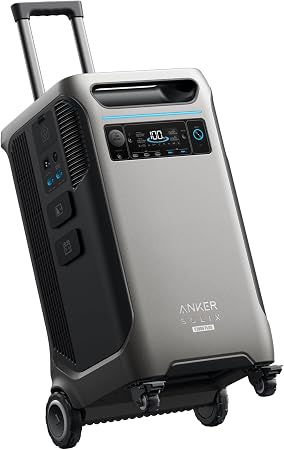
Best for RVs & Off-Grid Living: Anker SOLIX F3800 Plus
Typically: $2,200–$3,000
Retailer: Amazon
This is a different category of object.
At 3,840Wh and 136.7 lbs, it isn’t something you carry; it’s something you park.
Anker rates continuous output at 6,000W across split-phase 120/240V. That’s the number that matters if “off-grid” for you means running an RV air conditioner or a table saw — bigger loads than a phone charger and a lamp.
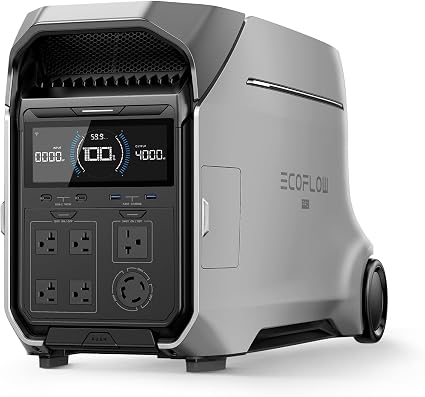
Best for Whole-Home Backup Power: EcoFlow Delta Pro 3
Typically: $3,100–$4,300
Retailer: Amazon
Biggest base capacity here at 4,096Wh, expandable to 48kWh with add-on batteries, and it takes an optional transfer switch kit for direct panel wiring — the closest thing on this list to a real generator replacement.
EcoFlow doesn’t publish a standalone AC-only recharge time for this one. The number on their site blends AC and solar input, so it isn’t comparable to the AC times above, and we’ve left it out instead of printing something that isn’t measuring the same thing.
What the Spec Sheets Don’t Tell You
Every one of these five carries the same 5-year warranty.
That sounds reassuring until you notice warranty length can’t help you choose between them. It’s an industry floor, not a differentiator.
The number worth distrusting more is surge wattage. Anker advertises “3,000W surge” on the C1000 and “6,000W X-Boost” on the Delta Pro 3, and both are real — but they describe a fraction of a second, not what the unit can sustain while your fridge compressor is cycling.
Size to the continuous-output number. That’s the one worth planning around.
| Model | Capacity | Continuous AC output | Full AC recharge | Weight | Warranty |
|---|---|---|---|---|---|
| Jackery Explorer 1000 v2 | 1,070 Wh | 1,500 W (3,000 W surge) | 1.58 h | 23.8 lb | 5 yr (3+2) |
| Anker SOLIX C1000 Gen 2 | 1,024 Wh | 2,000 W (3,000 W surge) | 49 min @1,600 W | 24.9 lb | 5 yr |
| EcoFlow Delta 3 Plus | 1,024 Wh | 1,800 W (3,600 W surge) | 56 min @1,500 W | 27.6 lb | 5 yr |
| Anker SOLIX F3800 Plus | 3,840 Wh | 6,000 W (120/240 V) | <3 h @1,800 W | 136.7 lb | 5 yr |
| EcoFlow Delta Pro 3 | 4,096 Wh (expandable) | 4,000 W (6,000 W X-Boost) | Not published (site lists a combined AC+solar figure only) | 113.5 lb | 5 yr |
Leave a Reply