Most people who want one machine for both floors and mopping should get the roborock Qrevo S Pro Robot Vacuum and Mop: LiDAR mapping, mop pads that lift the moment carpet is detected, and a dock that empties and washes. Robot vacuums stopped being a novelty a while ago, but picking one is still confusing because the marketing specs (suction in Pa, dock features, mapping tech) don’t tell you which robot fits your actual home. A tiny apartment with hard floors has completely different needs than a house with thick carpet, a shedding dog, and a raised threshold between rooms. These five picks cover the situations that come up most often, from a bare-bones budget option to a robot built specifically to climb over the obstacles that stop cheaper ones cold.
| Model | Suction | Navigation & obstacle handling | Self-empty dock | Runtime |
|---|---|---|---|---|
| roborock Qrevo S Pro | 18,500 Pa | LDS PreciSense LiDAR mapping; Reactive Tech (structured light) obstacle avoidance | Not published (self-sealing dust bag, no stated day capacity) | Not published |
| Lefant M210 Pro | 4,000 Pa | Gyroscope-based; no LiDAR map and no no-go zones | None (no self-empty base) | 200 minutes |
| Shark AI Ultra | Not published | Matrix Clean Navigation with 360° LiDAR vision | 60 days (bagless base) | 120 minutes |
| iRobot Roomba 105 Combo | Not published | ClearView LiDAR mapping; Carpet Detect avoids mopping rugs | 75 days | Not published |
| dreame X50 Ultra | 20,000 Pa | VersaLift Navigation (motorized LiDAR) plus AI RGB / 3D structured light; ProLeap retractable legs climb obstacles up to 2.36″ (6 cm) | 100 days | 220 minutes |
Best Overall: roborock Qrevo S Pro Robot Vacuum and Mop
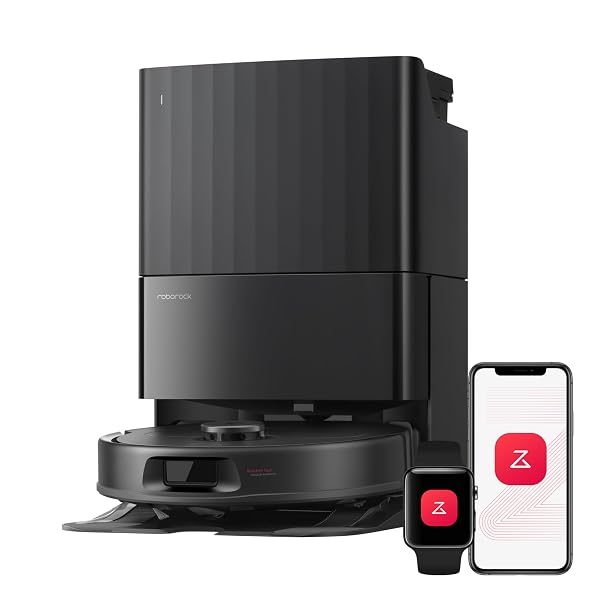
The Qrevo S Pro is the pick for someone who wants one robot that handles both vacuuming and mopping without babysitting it. roborock rates it at 18,500 Pa of HyperForce suction, and its LDS/PreciSense LiDAR builds a real-time 360-degree map rather than guessing at your floor plan. The dual spinning mop pads lift automatically the moment carpet is detected, so they never drag a wet pad across a rug.
The Multifunctional Dock empties the bin into a self-sealing bag and runs a high-temperature mop self-cleaning cycle (rated 167 degrees F) followed by warm-air drying. Obstacle detection is structured-light based rather than camera-and-AI based, which is still enough to support auto-suggested no-go zones and room-specific schedules from the app. A free account is required, but nothing is gated behind a paid tier.
Typically: $425–$575 | Retailer: Amazon
Best Budget: Lefant M210P Robot Vacuum
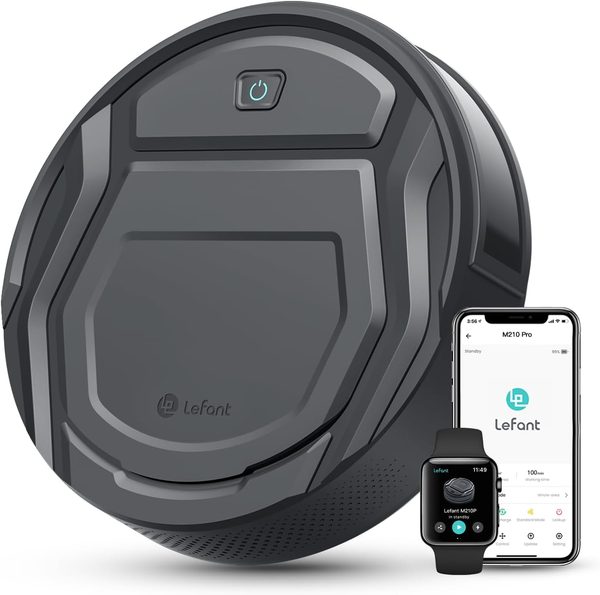
The M210P strips things back to what actually matters for a small apartment or a single floor of hard flooring and low-pile carpet: 4,000 Pa of suction in a thin body (under 3 inches tall) that fits under furniture other robots drive around, and a runtime near 200 minutes. There’s no self-empty base and no mopping function, which is exactly why it costs less.
The bigger trade-off: this model navigates with a gyroscope, not LiDAR. There’s no room map and no no-go zones — it cleans in straight lines or bounces around, with separate modes for random, arranged, fixed-point, and edge cleaning. That’s a real limitation next to the other four picks here, but for one simple room or floor it matters less, and you get dependable daily vacuuming with WiFi and Alexa control for a fraction of the price. Weighing a real navigation limitation like this against the rest of a robot’s feature set is the kind of trade-off we walk through in How We Pick.
Typically: $140–$200 | Retailer: Amazon
Best for Pet Hair: Shark AI Ultra Robot Vacuum with Self-Empty Base
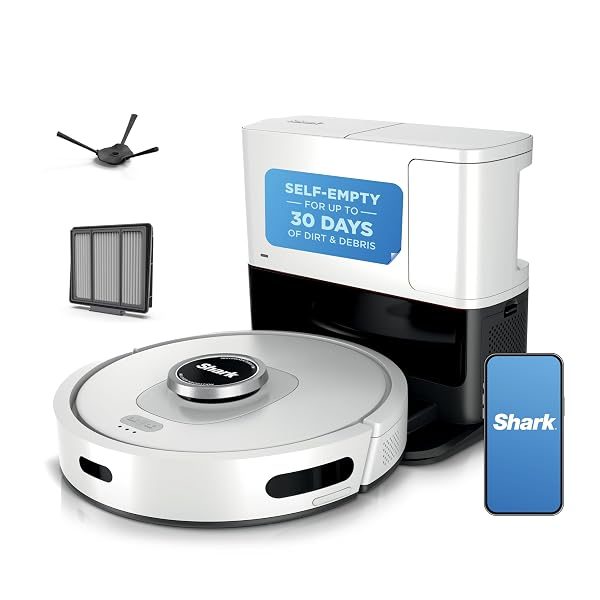
Pet hair is what breaks most robot vacuums — it wraps around brush rollers and clogs the intake within a few runs. The AI Ultra’s brushroll is, in Shark’s own description, "engineered to pick up more hair and is anti-hair wrap," paired with a 60-day bagless self-empty base so you’re not unwrapping hair from the brush every other day. Matrix Clean runs a precision grid pattern with multiple passes over each area rather than a random bounce, which matters for covering a shedding dog’s favorite spots. Navigation is 360-degree LiDAR that works even in full dark.
One correction: the self-empty base’s blast is loud, but it’s not the two-second event some listings suggest — independent reviews consistently clock it at ten to fifteen seconds. Still a rare, occasional noise rather than a daily annoyance, just a longer one than expected. No subscription is required, and Shark does not publish an official suction-power number for this model, so we aren’t stating one.
Typically: $375–$525 | Retailer: Amazon
Simplest to Live With: iRobot Roomba 105 Combo Robot Vacuum & Mop with AutoEmpty Dock
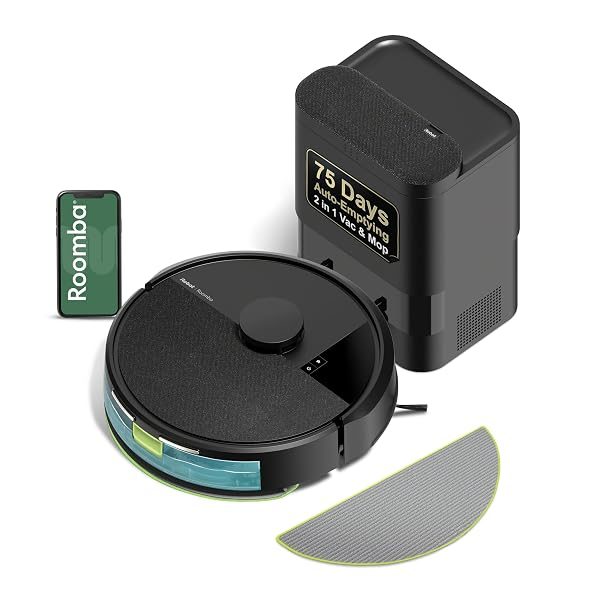
iRobot built the category, and the 105 Combo (the AutoEmpty Dock bundle, not the dock-less version sold under a similar name) defaults to sane behavior instead of asking you to configure everything up front. It vacuums and mops in one pass, using ClearView LiDAR to map the home and avoid obstacles even in the dark, and automatically detects carpet so it won’t drag a wet pad across a rug. The AutoEmpty dock holds up to 75 days of debris in a bag that traps 99% of allergens as small as 0.7 microns.
The Roomba Home App is more capable than "basic" — scheduling, room-specific targeting, four suction levels, three water-dispensing levels for mopping, and keep-out zones — none of it behind a paid tier. If you’ve been put off by apps with too many menus, this is the one that gets out of your way while still giving real control when you want it.
Typically: $250–$350 | Retailer: Amazon
Best for Obstacles & High-Pile Carpet: dreame X50 Ultra Robot Vacuum and Mop
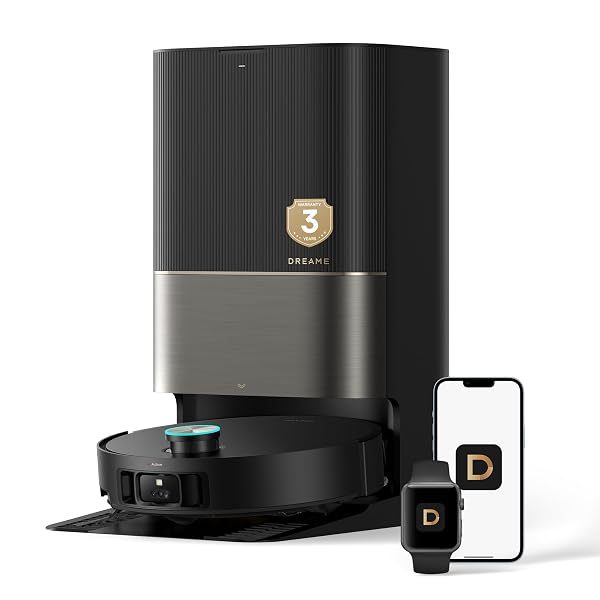
Most robot vacuums stall out at a half-inch threshold or bog down in thick carpet. The X50 Ultra solves that with its ProLeap system: retractable legs lift the chassis to climb a single step up to about 1.65 inches (4.2 cm), or a combined two-tiered threshold up to 2.36 inches (6 cm) — enough for most interior door thresholds and rug edges that stop cheaper robots cold. Suction is rated at 20,000 Pa, and obstacle avoidance combines a camera with AI trained on roughly 200 object types plus 3D structured light, not a single sensor type.
Navigation uses a top-mounted LiDAR turret that retracts to clear low furniture, and the DuoBrush’s tapered, one-piece dual-roller design channels hair to one side to cut down on tangling. The dock washes mop pads in hot water and heat-dries them. Setup requires a free Dreamehome account, but nothing is gated behind a paid subscription. It’s priced like the specialist tool it is — buy it if your home’s layout has genuinely stopped other robots, not as a default first purchase.
Typically: $750–$1,050 | Retailer: Amazon
Why Navigation Tech Matters More Than the Suction Number
The spec worth checking before suction numbers is how a robot finds its way around, because that determines whether it cleans your whole floor or just the parts it bumps into. Three of these picks use LiDAR that builds a real map: the roborock Qrevo S Pro’s LDS/PreciSense system, the Shark AI Ultra’s 360-degree LiDAR, and the iRobot Roomba 105 Combo’s ClearView LiDAR. The dreame X50 Ultra uses a top-mounted LiDAR turret that retracts to get under low furniture. All four support real room maps and no-go zones.
The Lefant M210P is the honest exception: it navigates with a gyroscope, not LiDAR, so there’s no room map and no no-go zones — it cleans in straight lines or bounces around, with separate modes to compensate. That’s the actual cost of its price; in a small, simple space it matters less. In a larger or more cluttered one, mapped navigation earns its higher price back in coverage.
Obstacle Avoidance and Crossing Thresholds
"Obstacle avoidance" covers two problems: not hitting things, and not getting stuck on them. The roborock Qrevo S Pro avoids objects using structured light rather than a camera; the dreame X50 Ultra combines a camera with AI object recognition and 3D structured light, a more elaborate approach. Neither Shark nor iRobot publishes a specific obstacle-sensor spec beyond LiDAR-based path planning.
Crossing thresholds is separate, and it’s where the X50 Ultra stands out: its ProLeap retractable legs climb a single 4.2 cm step, or a combined two-tiered threshold up to 6 cm, high enough for most interior door strips and rug edges that stop the other four picks here. If a threshold or rug edge has defeated a robot vacuum in your home before, that’s the spec to check first.
Self-Empty Docks and the Mop Question
Three of these five both vacuum and mop: the roborock Qrevo S Pro, the iRobot Roomba 105 Combo, and the dreame X50 Ultra. All three lift or avoid the mop pad when they detect carpet, so none should drag a wet pad across a rug. Their docks go further than emptying the bin — the Qrevo S Pro’s self-cleans its mop pads at a rated 167 degrees F and warm-air dries them, and the X50 Ultra’s washes pads in hot water and heat-dries them too, so you’re not reinstalling a damp pad the next day.
The Shark AI Ultra self-empties but doesn’t mop, which simplifies things if you don’t want a mopping ecosystem to maintain. The Lefant M210P does neither — no self-empty base, no mop — the main reason it costs a fraction of the others. Self-empty bases and mop-washing docks mean fewer weekly chores, but also more consumables (bags, pads, cleaning solution) to keep buying.
Handling Pet Hair Without Clogging the Brush
Hair-wrap is what actually kills a lot of robot vacuums over time, not suction. The Shark AI Ultra is built around this problem: Shark describes its brushroll as engineered to be anti-hair-wrap, paired with a 60-day bagless self-empty base so you’re not unwrapping hair by hand every few days. The dreame X50 Ultra takes a different approach with its DuoBrush, a tapered one-piece dual-roller design that channels hair to one end instead of letting it wind around the middle.
roborock and iRobot don’t market a specific anti-tangle brush design for these models, so for pet hair the AI Ultra or the X50 Ultra are the two picks here built to address it directly rather than as a side effect of suction.
Apps, Subscriptions, and Ongoing Costs
None of these five robots gates a feature behind a paid subscription. Four — the roborock, Shark, iRobot, and dreame picks — require a free manufacturer app account to operate at all, which unlocks scheduling, room maps, and no-go/keep-out zones at no extra cost. The Lefant M210P only needs WiFi and an app or Alexa for basic control, since it has no map to store.
The cost that’s easy to miss isn’t a subscription — it’s consumables. Brush rolls, filters, mop pads, and (for the self-empty models) dust bags wear out and need replacing every few months regardless of which robot you buy. Before committing to a dock ecosystem, check what a replacement bag or pad costs from that manufacturer — that’s the ongoing bill that follows the purchase price.
Leave a Reply